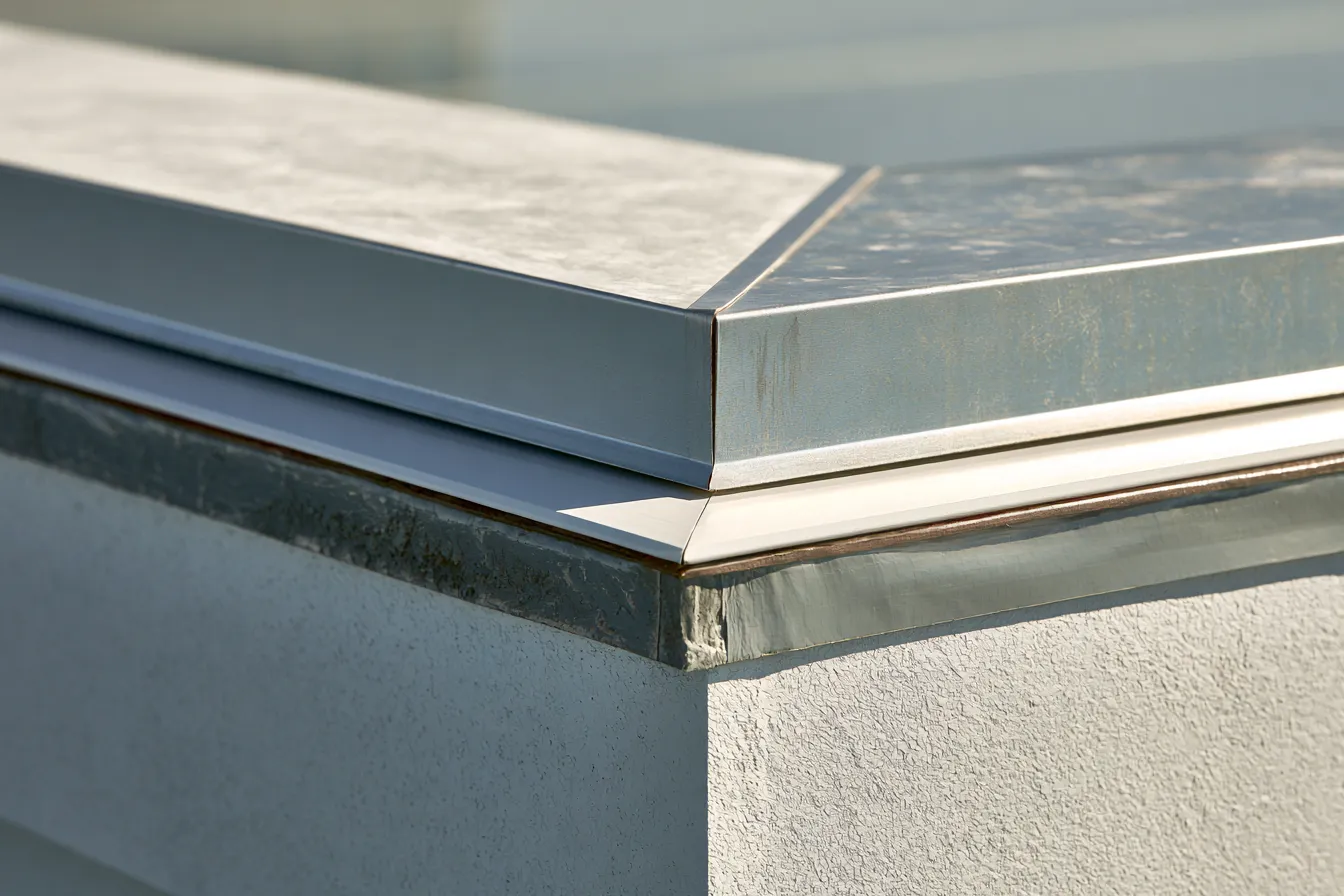
Commercial Roofing in Tahlequah, OK
Most of Tahlequah's downtown storefronts and campus-area buildings carry a flat membrane, not shingles. A local roofer walks it, grades every seam and drain, and documents it before naming a number.
- Your roofer finding the source, not just the symptom
- No pushing, decide on your own time
- Repair when repair is enough
Call (539) 234-6218
What commercial roofing looks like in a college town this size
Commercial roofing in Tahlequah means an older, modest base of buildings, not a corridor of towers: brick storefronts along Muskogee Avenue downtown, offices and student-serving retail near Northeastern State, and a little light-industrial and civic building around the edges. Almost none of it wears shingles, so these roofs run flat or low-slope, a single-ply membrane, built-up asphalt, or a coating.
The deck, drains, seams, and any moisture in the insulation get logged with dated photos so the roof condition is on record first. It starts with a no-cost inspection.
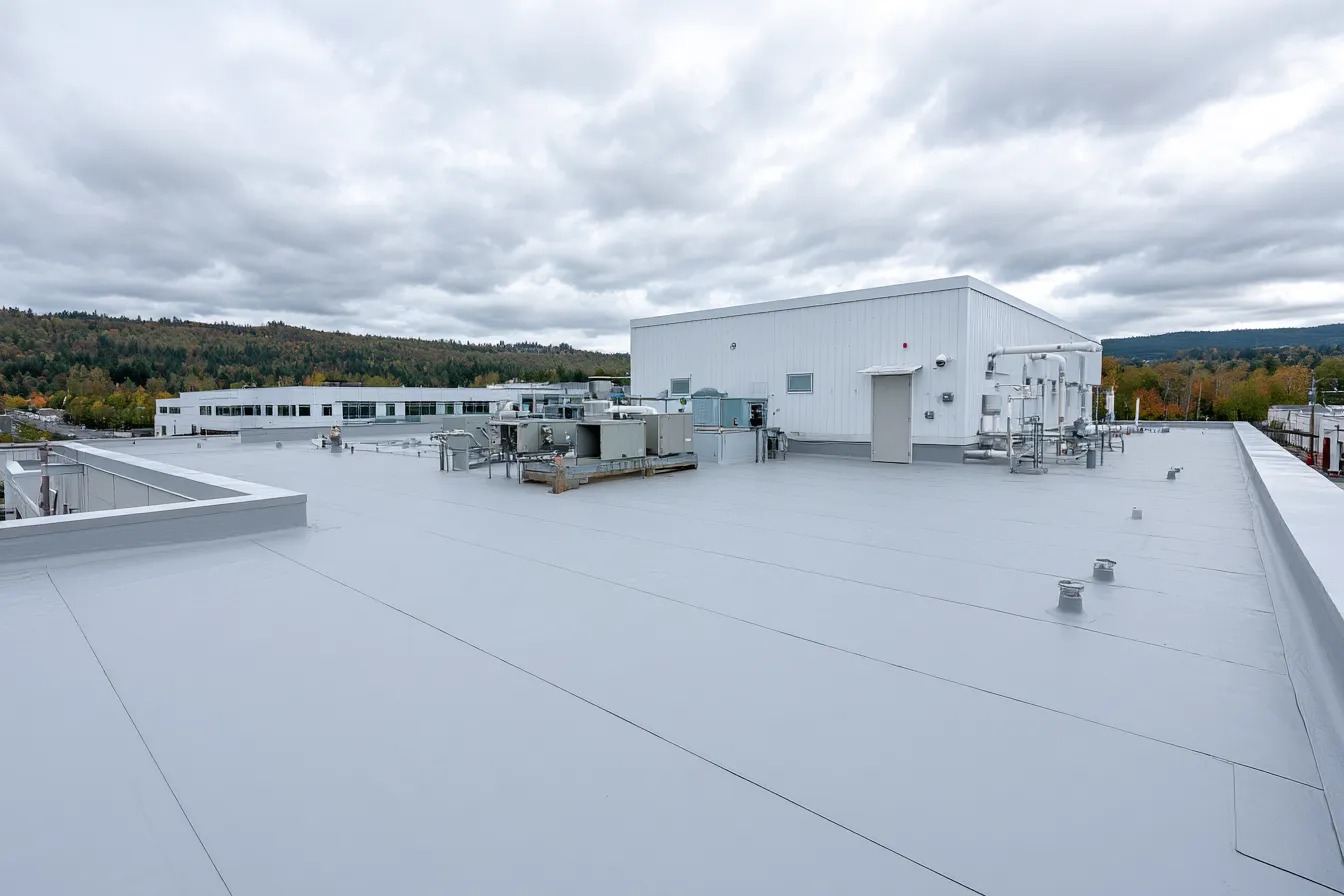
The flat systems that fit a Tahlequah building, and where each belongs
No flat roof wins outright; the right one turns on the building, on how the deck sheds water, on how often someone is up top tending rooftop units, on whether a kitchen hood exhausts across it, and on how many more years you plan to hold the place. In this wind country the uplift rating and how well a membrane is fastened count too. A roofer settles on a system only after the roof is read and documented. These are the low-slope roofs installed and serviced on Tahlequah buildings, from a downtown storefront to a campus-area office.
TPO
A white single-ply skin that covers much of the newer retail and office space in town. The panels are heat-welded seam to seam into one watertight sheet, and the bright top reflects summer heat rather than absorbing it, so the air handlers up top work a little less.
EPDM
Black synthetic rubber, plain to look at but famously long-lived. Rolled out across a big uncluttered deck and largely left be, it can serve for decades, which is why a warehouse or a low-traffic civic roof tends to land on it.
PVC
A hot-welded plastic membrane built to shrug off what a commercial kitchen throws at a roof. The grease and fryer vapor that eat away at other systems simply run off it, so a diner on Muskogee Avenue or anything exhausting a hood overhead is its natural home.
Modified bitumen
Reinforced asphalt rolled down in layers, sturdy under boots and forgiving of a low spot that clears slowly. You mostly find it on the smaller roofs a technician has to climb regularly to keep rooftop units running.
Built-up roof (BUR)
The traditional tar-and-gravel build, layer bonded over layer until the assembly is deep and durable. It takes more labor than unrolling a single sheet, yet a hundred years of track record is why it still tops a number of the oldest brick buildings downtown.
Roof coatings
A silicone or acrylic topcoat spread over a membrane that has weathered but stays solid underneath, winning back reflective life for a fraction of what a tear-off runs. The one condition is a dry deck; lay it over insulation holding water and all it does is trap the moisture below.
Unsure what is actually up there, or what the last hard blow quietly worked loose? A documented read answers exactly that: a local roofer identifies the membrane, estimates the years it has left, and dates any storm damage before a repair-or-re-roof decision is on the table. For roughly what each system runs, the roofing cost guide sets out fair ranges.
From a single seam to a full re-roof, and the honest call between
Nearly every commercial job in Tahlequah fits one of four buckets. A local roofer sorts your building into the right one and names the choice in writing before a crew is booked.
- 01A repair scoped to the fault alone
- Just the failure gets addressed, not the entire roof: a seam beginning to peel, a drain that ponds, a brittle stretch of parapet flashing, or a leak at the curb of a rooftop unit, with each one tracked back to whichever membrane is already in place.
- 02A coating, but only on a roof that qualifies
- Where the deck below the membrane reads dry and solid, a rolled silicone or acrylic coat can freshen the surface and buy years at a fraction of a re-roof. Where the insulation has drawn in water it only locks the problem inside, which is why the moisture reading is taken before any figure is quoted.
- 03A complete re-roof when the membrane is done
- A fresh low-slope assembly, whether single-ply, modified bitumen, or built-up, specified and anchored against the hard blows that sweep this open terrain, put on only after a roof is plainly finished and no patch is worth the money.
- 04An honest coat-or-tear-off call
- Whether a coating earns its cost or a full replacement is the truthful call turns on four questions: how often the roof is walked, whether moisture has settled into the insulation, the condition of the deck, and how many more years you plan to hold the building. All four get measured before any advice is given, never after the job is booked.
A flat roof takes the wind every bit as hard as a pitched one; the difference is that it conceals the harm, since a peeled seam or a length of loosened flashing shows nothing from the lot below. Cherokee County's record runs to wind rather than hail, so a local roofer photographs and dates whatever the storm left on that first walk, then judges whether a claim is even there. How a flat roof reads after a blow is spelled out on the storm damage page.
What owners ask before re-roofing a Tahlequah building
Plain answers on whether a job is worth it at this size, stretching a flat roof on a budget, the storm damage you cannot see from the ground, and how the work gets staged around your tenants.
Q1My building is a small downtown storefront. Is that too small to bother with?
Q2Money is tight this year. How do I stretch a flat roof without replacing it?
Q3Where do these flat roofs usually start leaking?
Q4Wind, not hail, is our real weather here. Does that change a commercial claim?
Q5If a storm hits the building, who documents it, and does the brand file the claim?
Q6Can you re-roof a downtown storefront without closing me for a week?
Put your building roof on the record.
A roofer documents the roof system as it stands and writes up the scope with a budget line for planning. Nothing is owed for the assessment.