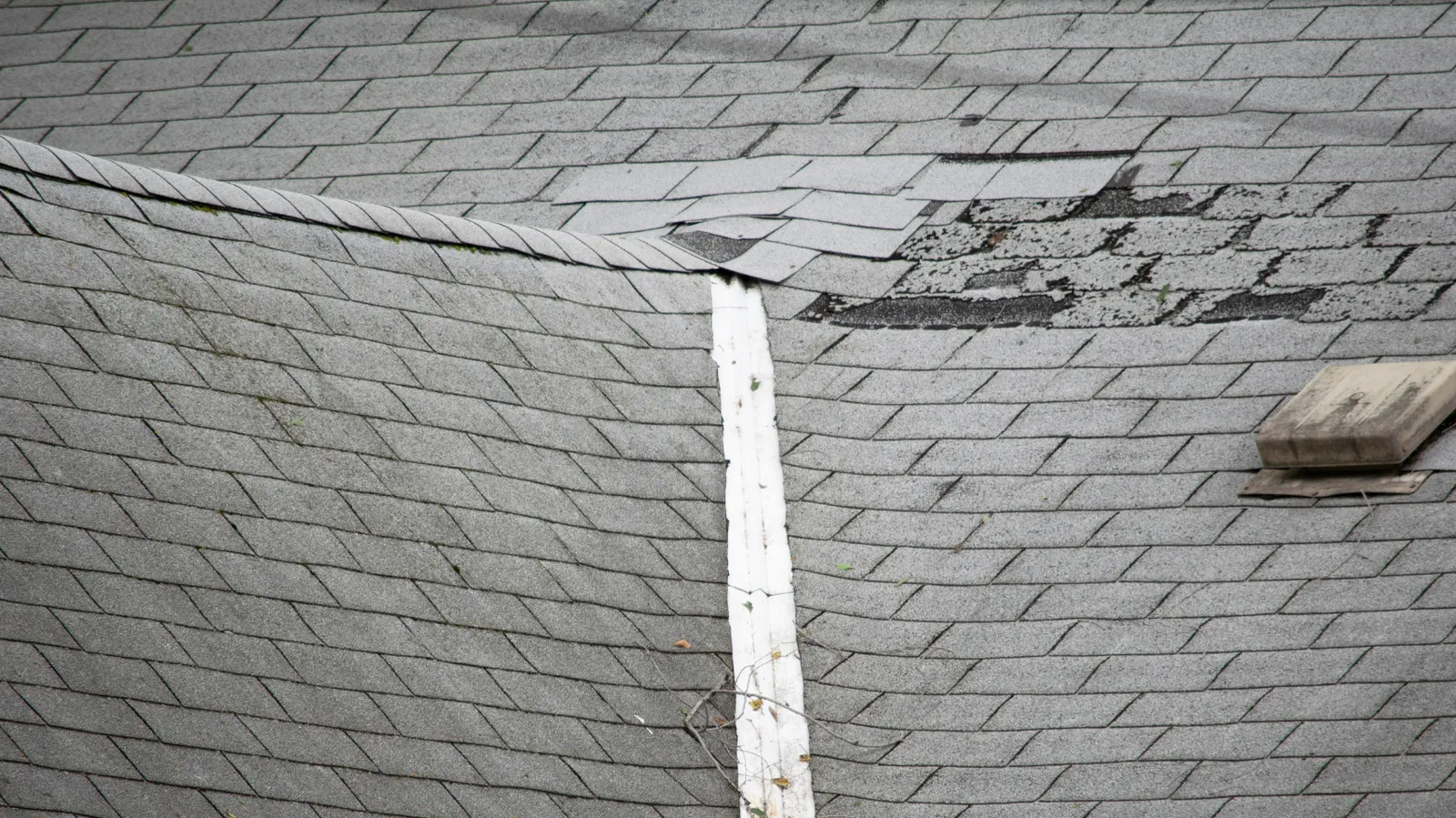
Stand in a Tahlequah yard during a hard blow and the sound is not hail on the roof, it is the wind working the big hardwoods overhead and the crack of a limb somewhere down the block. That is the honest shape of a storm in these Ozark foothills, and it is why the damage that stacks up on roofs here comes from straight-line wind and falling limbs, not the hail belt that gets the Oklahoma headlines. That matters because chasing the wrong danger costs money. A homeowner watching the sky for baseball hail can miss the gust that quietly broke the seal on a slope, or the limb that cracked a few shingles on its way down. Here is what actually happens to a Tahlequah roof when the wind comes through, how wind damage reads differently from a limb strike, and what the Cherokee County record really shows. The fuller storm-damage guide carries the rest of the picture.
The Cherokee County record is a wind record, not a hail belt
It helps to start with what the county actually logs, because the reputation of Oklahoma weather does not match this corner of it. Over a recent four-year window the NOAA record for Cherokee County reads as a wind story with a thin hail column:
- A 92 mph straight-line wind gust near Cookson on May 19, 2025, the top wind reading on the county record.
- 85 mph near Scraper and 81 mph near Melvin in the same window, so the high wind was not a one-off.
- Only 11 hail days across the whole four years, and the largest stone just 1.75 inches, logged out at Lost City.
- No metro-Tulsa hail cadence here, so a roof read tuned to hail alone misses the damage that is actually common.
What straight-line wind does to a Tahlequah roof
Straight-line wind does its damage by leverage, not impact. A hard gust gets under the edge of a shingle, breaks the factory seal that holds the tab down, and bends it back, and once that seal is broken the shingle never quite lies flat again. From the ground the roof can look whole, but the wind has opened a path for the next rain to track underneath and reach the decking.
On the exposed higher terrain on Tahlequah's south side, out around Southridge, that lifting and blow-off is the leading worry, because the newer roofs there catch the full force of a gust with little to break it. A roofer reads a wind-hit slope for lifted and creased tabs and for missing shingles, matches it to the direction the storm came from, and dates it, rather than hunting for the bruises a hailstorm would leave.
What a falling limb does, and why the canopy makes it worse
A limb strike is the other half of the story, and it is the blunt one. Tahlequah's oldest streets, around the Downtown Historic District and the blocks near the university, sit under a dense canopy of mature hardwoods that shade the houses beautifully and hang right over the roofs. When the wind takes a limb down, it can crack shingles, punch through the decking, or dent and tear the roof at the point of impact.
The two kinds of damage read differently, and that is the point of a close look. Wind lifting is spread across a slope and follows the storm direction; a limb strike is concentrated where the branch landed, often with debris still there to show it. Where the limb cracked only a few shingles over sound decking, a targeted repair fixes it at the spot it happened rather than turning into a whole re-roof. A dead or overhanging limb that keeps dropping smaller wood also grinds granules off the shingles below it over the seasons.
Why wind damage hides, and hail gets the blame
The trouble with wind damage is that it is undramatic. There is no field of dented gutters and shattered skylights to point at, just a slope that looks a little rumpled and a seal that has quietly let go. So it is easy to wait, or to assume that if there was no hail there was no damage, and a roof can sit with broken seals through a summer of rain before anyone connects the leak to the storm that caused it.
That gap is exactly why the wind-led county record is worth taking to heart. A roof here is far more likely to be undone by a 90-mph gust than by a rare 1.75-inch stone, so the honest read after a rough night is a look for lifted tabs and limb marks, dated to the storm. When that read turns up real damage, the dated file is also what a wind insurance claim runs on later.
- Walk the yard and gutters after a hard blow for granules, torn tabs, or limb debris.
- Note the date of the storm, since that is what ties any damage to the county's record.
- Get the exposed slopes and ridges read up close, since wind damage rarely shows from the ground.
- Keep the dated photos on file in case a claim comes up later.
Did a windy night rough up your Tahlequah roof, or just rattle the trees? Describe what you saw to Tahlequah Peak Roofing, and a local roofer will read every slope for lifted shingles and limb damage and tell you plainly what the wind did, at no cost. Reach out and a roofer sets the free look.
Get a wind-damage check Call (539) 234-6218